Wonders of Bhutan
Bhutan’s foremost blogger, solo female traveler, and author, Tshering Denkar a.k.a Denkars Getaway, handpicks SEVEN wonders of Bhutan that make this country a special place to visit and worth paying for.
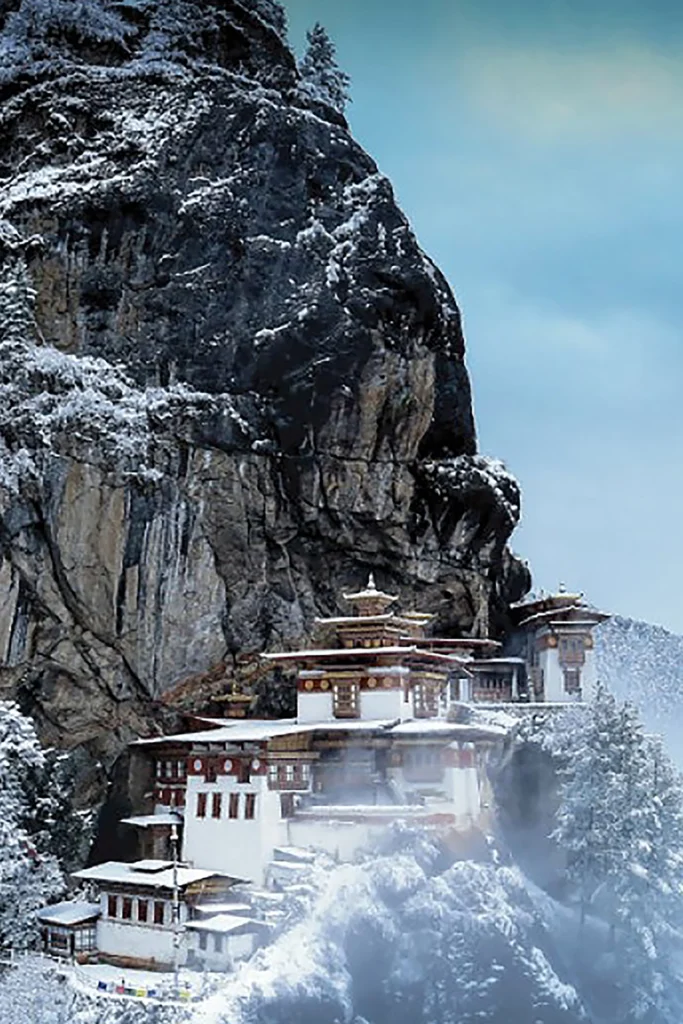
TAKTSANG MONASTERY: The Tiger’s Nest
Incredibly built on a cliff face, 3,000 meters above the picturesque Paro Valley, Taktsang Monastery, also known as the ‘Tiger’s Nest’, is unarguably the most iconic architectural masterpiece in Bhutan. An epitome of traditional Bhutanese architectural aesthetics, Taktsang is one of the most sacred spiritual landmarks in the country. According to legend, the eighth century Buddhist saint Guru Padmasambhava flew to the site of the monastery riding atop a tigress and meditated in a cave to subdue an evil spirit and bless the land. The monastery was constructed at the site in 1692. Although it was razed by fire in 1998, the monastery was reconstructed to its former glory. During auspicious days hundreds of local pilgrims hike through the pine trail to seek blessings. The three-hour hike is one of the most peaceful and fulfilling hikes in the country. Bhutanese believe that one must visit Taktsang Monastery at least once in their lifetime. For tourists, the journey to Bhutan is incomplete without a trip to Taktsang!
SNOWMAN TREK: The Toughest Trek in the World
Snowman Trek is one of the most physically gruelling treks in the world, with the trail going through 11 mountain passes located above 4,500 meters and several campsites located in oxygen sparse attitude above 5,000 meters. Gonphula is the highest pass along the trail at 5,500 meters near the far-flung village of Lunana. While the trek pushes your body to the limits, it also provides the rare opportunity to experience the unsullied mountain landscapes, see up-close breathtaking mountain peaks, walk on the planet’s last surviving Himalayan glaciers, and connect with the arcane culture of Bhutan’s remotest communities of yak herders. The month-long trek takes you on an unforgettable journey, from the base of Mount Jomolhari, over Neylayla Pass, to the highland villages of Lingzhi and Laya, continuing along Mount Gangchen Tag, moving closer to Mount Masagang and further to Gonphula and other giant mountains, covering most of the mountain adventures in Bhutan. Mountaineers and trekkers from across the globe aspire to trek this route on the roof of the Himalayas.
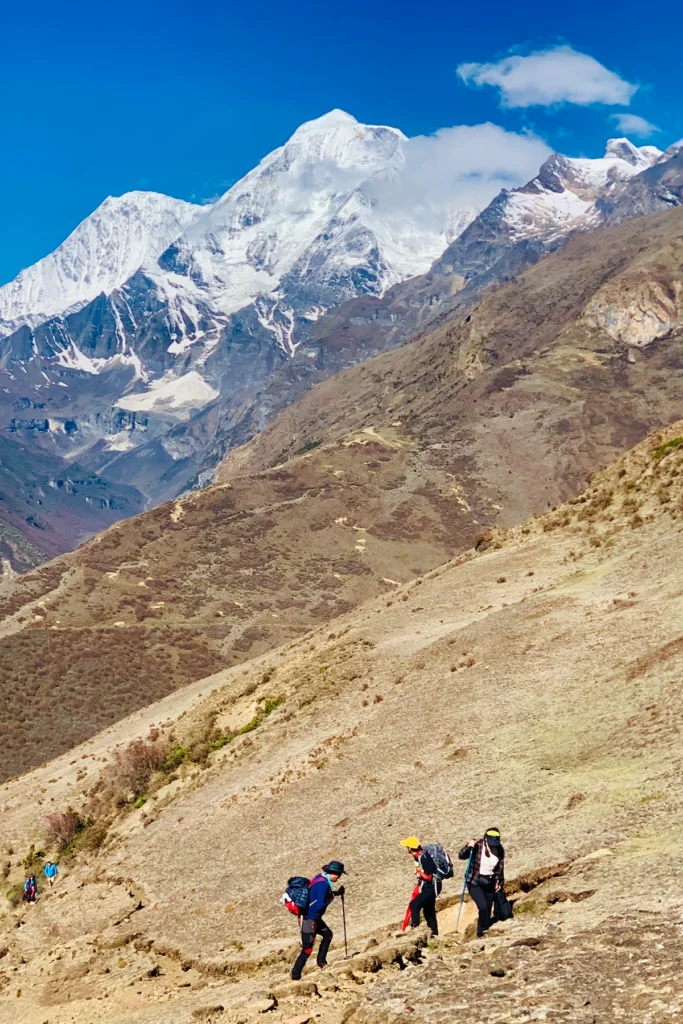
FORTRESS OF TRONGSA : A Historical & Architectural Monument
Bhutanese architecture is best illustrated through its centuries-old dzongs (fortress), regal and imposingly built on strategic locations on hilltops, ridges, and mountain spurs. Trongsa Dzong, in central Bhutan, is one of the most spectacular works of traditional Bhutanese engineering and architecture in Bhutan. Built in 1648, the Dzong is located on a mountain spur, steeply rising from the base of roaring Mangdechhu (river). The Dzong comprises a maze of stonewalled buildings, corridors, narrow alleys, and spacious stone-paved courtyards. The longest and biggest dzong in Bhutan, the fortress boasts 25 lhakhangs (temples), four gateways, and four courtyards. For many centuries, the Dzong served as the seat of the powerful Trongsa Penlop and later the Kings of Bhutan. Traditionally, the Crown Prince is appointed as Trongsa Penlop before acceding to the Golden Throne.
CHIMI LHAKHANG : The Temple of Fertility
To the much shock and surprise of visitors, phallic symbols – be it paintings or carvings – are part of Bhutan’s unusual culture, omnipresent on walls, doors or hanging by eaves of the houses, except in monasteries or temples. Phalluses are believed toward off evil spirits and malicious gossip. The phallusworship in Bhutan is associated with the 14th century eccentric Buddhist saint Lam Drukpa Kuenley, also referred to as the Divine Madman, who used lewd, unconventional methods to teach Buddhism. The maverick saint is believed to have subdued evils spirits with his Thunder Bolt, a euphemism for phallus. Chimi Lhakhang (temple) in Punakha, built in 1499, still houses the wooden phallus that he brought from Tibet. Known as the temple of fertility, this wooden phallus, decorated with a silver handle, is used to bless people who visit the temple or couples seeking blessing to beget children. The tiny Sopsokha Village below the temple is compact with handicraft shops that showcase and sell a bizarre collection of phallus products of varying size and adornments. These phallus products can be a quirky souvenir from Bhutan.
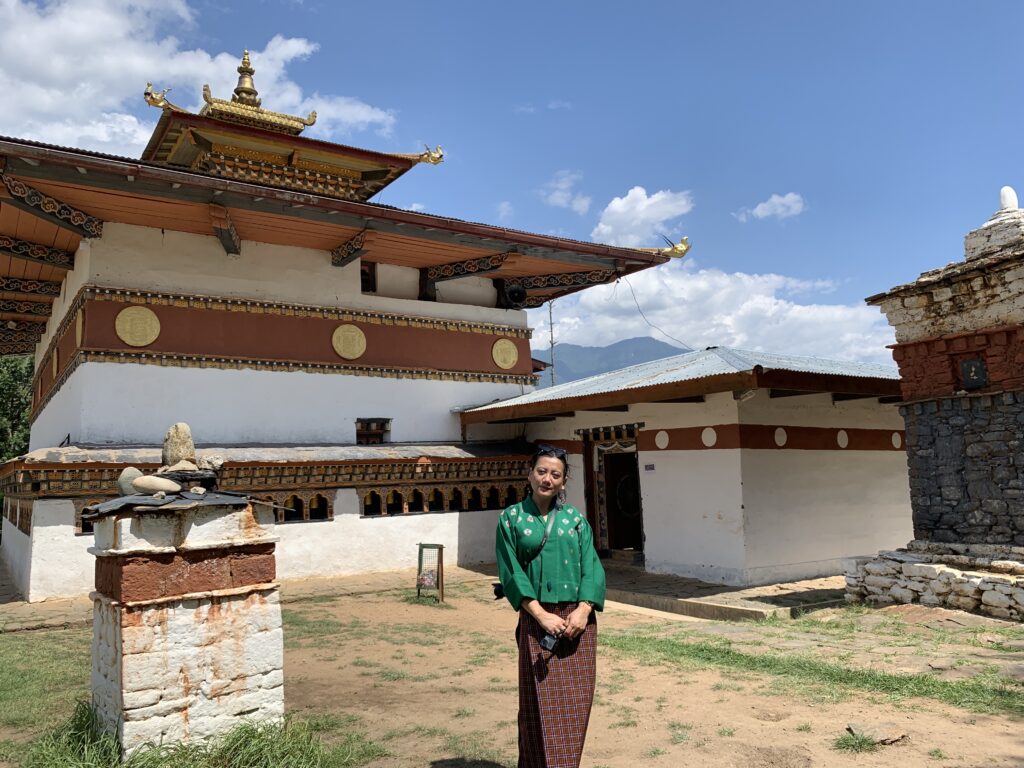
MOUNT GANGKAR PUENSUEM: World’s Highest Unclimbed Mountain
Bhutan is home to some of the world’s highest unclimbed mountains peaks. The Kingdom boasts more than 10 peaks above 7,000 meters. In 1994, Bhutan made a conscious decision to prohibit climbing mountains higher than 6,000m out of respect for local spiritual beliefs. At 7,570 meters, Mt Gangkar Puensum – the abode of guardian deity of central Bhutan – is the highest unclimbed mountain in the world. Trekking to the base camp of Mount Gangkar Puensum is the closest you can be to this iconic mountain never conquered by any human. The trek that starts in Bumthang, runs along emerald green Chamkharchhu (river) and remote nomadic communities of yak herders who are humble, hospitable, and proud of their traditional way of life. Nomads are truly the guardians of the mountains. The last campsite for tourists is Bamarpa from where you can see Mt Gangkar Puensum upclose, near yet so far.
EMA DATSI: The Spicy National Dish
Bhutan is a country where McDonaldization has never seen its dawn. Although small, the Kingdom offers a great diversity of cuisines – a gastronomical delight indeed. Travelers can relish various delicacies and unique Bhutanese cuisines in different regions of the country. And through these delicacies, cuisines and experiences, one can learn about the history, tradition, and local culture of the community. Popular dishes include red rice, khuli (buckwheat pancake), hoentay (dumplings), and puta (noodles), among others. But the most common yet special dish of all is Ema Datsi – a dish made with spicy chillies and cheese. Ema Datsi can be prepared with fresh green chillies, sun-dried red chillies or white-boiled dried chillies. And it comes in different variations (dry or with soup) with different spicy levels, from mild to mind-blowing spicy! If you don’t have too much tolerance for spicy food, go slow on it. But you must surely try this special dish!
THE HAPPY PEOPLE: Friendly, Warm and Honest
From people living in remote hamlets and small villages scattered around Bhutan’s rural landscape, often in difficult conditions, far-flung nomadic communities of yak herders in the highlands to those dwelling in urban towns and emerging cosmopolitan towns like the Capital Thimphu, a common characteristic of Bhutanese people is that they are genuinely warm- hearted, honest, and hospitable. Yet, they are fierce in their efforts in guarding their rich culture and way of life and uncompromising when it comes to conserving their pristine environment. That said, Bhutanese people are open-minded and modern. It is this unique blend and balance that make people of Bhutan easily the friendliest and the most accessible people in the world. Travel to any remote village, and people will greet and welcome you with a smile. It is part of Bhutanese culture to treat guests with utmost respect.